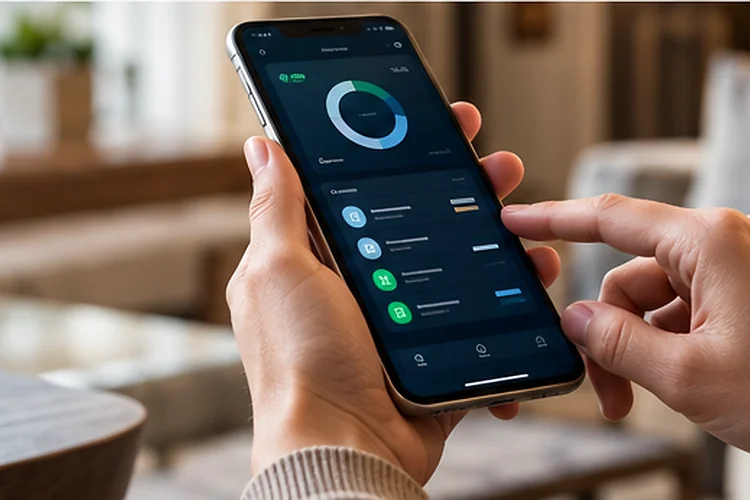
How Digital Banking Platforms Change Personal Finance Management
Managing money used to involve visiting a bank branch, balancing a checkbook, saving paper statements, and manually tracking expenses. Today, most of those tasks can happen from a phone before breakfast.
Digital banking platforms have transformed everyday financial management by combining payments, transfers, savings, budgeting tools, transaction alerts, credit access, and investment features inside increasingly connected ecosystems.
For consumers, that means financial information can be available almost instantly instead of arriving on a monthly statement.
Understanding how digital banking platforms change personal finance management is not simply about convenience, though. These tools can influence how people budget, save, spend, borrow, and react to financial problems.
The World Bank defines digital financial services broadly, covering products such as digital payments, e-money, savings, loans, insurance, and investment services delivered through digital technology.
These services can improve efficiency and accessibility, but they also introduce risks involving privacy, cybersecurity, and consumer protection.
Used thoughtfully, digital banking can turn personal finance from a monthly task into an ongoing decision-making system.
1. Real-Time Visibility Changes How People Budget
One of the biggest differences between traditional and digital banking is speed.
Years ago, consumers often discovered overspending only after reviewing a statement. Today, transactions can appear in an app almost immediately, making it easier to see where money is going while there is still time to adjust.
Many platforms automatically categorize purchases into areas such as groceries, transportation, entertainment, subscriptions, and dining.
That does not make budgeting automatic, but it removes a large amount of manual work.
The OECD’s 2026 digital financial literacy framework for ASEAN specifically highlights digital budgeting tools, account aggregators, expense tracking, and the ability to adapt budgets when unexpected financial pressure occurs.
For example, someone who notices restaurant spending reaching $450 halfway through the month can change behavior immediately rather than discovering the problem weeks later.
That feedback loop is one of digital banking’s biggest personal-finance advantages.
2. Automation Makes Saving Less Dependent on Willpower
Saving money often fails for a simple reason: people plan to save whatever remains at the end of the month.
Frequently, very little remains.
Digital platforms make it easier to reverse that process through automatic transfers.
A user might schedule $300 to move into savings immediately after payday. Other systems can automatically divide income among bills, emergency savings, investment accounts, and spending money.
Some platforms also offer round-up features that move small amounts into savings after purchases.
Automation does not magically create additional income, but it changes the timing of financial decisions. Saving becomes something that happens before discretionary spending instead of afterward.
This can be especially useful for building an emergency fund or accumulating money toward specific goals.
Digital finance tools increasingly support these behaviors, and the World Bank notes that digital financial services can make saving, payments, and broader financial management more convenient and accessible.
The best automaiton is simple enough that you do not need to think about it every week.
3. Account Aggregation Creates a More Complete Financial Picture
One person may have several financial relationships at the same time.
There could be a primary bank account, high-yield savings account, credit cards, investment platforms, loans, digital wallets, and retirement accounts.
Looking at each one separately can make personal finance feel fragmented.
Account aggregation changes that.
Some digital platforms allow users to connect multiple financial accounts so balances and transactions can be viewed in one place.
The OECD’s digital financial literacy framework recognizes both the opportunities and risks of services that provide access to multiple financial accounts through a single interface. It also emphasizes checking privacy permissions and data-sharing policies before using such tools.
A consolidated view can make it easier to calculate net worth, identify duplicate subscriptions, track debt, or understand how much cash is actually available.
However, convenience should not replace awareness about which companies receive access to financial data.
4. Digital Payments Make Money Move Faster
Payments are another area where digital banking has changed everyday financial behavior.
Consumers can transfer money, pay bills, receive income, and make purchases without physically handling cash or visiting a branch.
The World Bank’s Global Findex 2025 tracks how adults across 141 economies use financial accounts, digital payments, savings, and borrowing, reflecting just how central digital access has become to modern financial participation.
Speed has obvious advantages.
Bills can be scheduled automatically, money can move between accounts quickly, and forgotten payments can become less common.
But frictionless spending has another side.
When paying requires only a tap, swipe, or stored card, spending can feel less noticeable than handing over physical money. OECD research warns that increasing digital-payment adoption can create behavioral risks, including impulse purchasing, alongside fraud and security concerns.
Convenience should therefore be combined with spending alerts and regular account reviews.
5. Financial Alerts Turn Banking Into an Early-Warning System
Digital banking platforms can do more than show balances.
They can actively notify users when something important happens.
Useful alerts might include a low balance, large transaction, unusual card purchase, upcoming payment, direct deposit, international transaction, or failed transfer.
This transforms banking from a passive record into an early-warning system.
Suppose your normal credit card spending is under $100 per transaction and a $1,500 purchase suddenly appears. A real-time alert gives you a chance to investigate almost immediately.
The same logic applies to cash flow.
A low-balance notification could prevent an automatic bill from causing an overdraft.
CFPB guidance on mobile and online banking emphasizes security features, account monitoring, and protecting login credentials when using digital financial services.
The goal is not to receive notifications for every cup of coffee. Too many alerts eventually become noise.
Choose alerts connected to events that genuinely require action.
6. AI Is Adding a New Layer of Personalization
Digital banking is increasingly moving beyond basic transaction history.
Artificial intelligence can analyze financial patterns and potentially identify unusual spending, forecast bills, categorize transactions, provide personalized insights, or highlight opportunities to save.
Imagine a system noticing that your electricity costs consistently rise every summer or that several subscriptions increased their prices.
Instead of discovering those patterns manually, the platform could surface them automatically.
The OECD reported in 2026 that AI is transforming how consumers access financial information and personal-finance guidance, offering opportunities for greater accessibility and personalization.
However, it also identified risks involving bias, inaccurate outputs, commercial influence, privacy, and overreliance on automated recommendations.
That distinction matters.
AI-generated financial insights can be useful as prompts for investigation, but they should not automatically be treated as correct financial advice.
Your banking app may understand your transaction history. It does not necessarily understand your entire financial life.
7. Digital Banking Expands Access to Financial Services
Perhaps the biggest long-term effect of digital banking is accessibility.
Traditional banking infrastructure can be expensive to operate and difficult to reach for people living far from physical branches.
Digital platforms reduce some of those barriers.
A smartphone can potentially become a gateway to payments, savings, money transfers, credit, insurance, and other financial tools.
The World Bank reports that digital financial services can lower transaction costs, improve speed and transparency, and expand access for underserved populations.
Its Global Findex research also tracks how digital connectivity increasingly overlaps with account ownership and financial participation.
However, financial inclusion is not achieved simply by releasing an app.
People still need reliable internet access, digital skills, appropriate consumer protections, understandable products, and confidence that their information is safe.
A digital account that someone cannot safely use provides limited practical value.
8. Security Becomes Part of Everyday Money Management
Digital banking reduces some traditional risks while creating new ones.
Consumers no longer need to carry large amounts of cash, but accounts can now be targeted through phishing, stolen passwords, fake websites, malware, social engineering, or unauthorized data access.
That makes cybersecurity a personal-finance skill.
Strong unique passwords, multi-factor authentication, transaction alerts, device security, and skepticism toward unexpected banking messages should become normal habits.
The World Bank identifies cybersecurity and data privacy as central issues in digital financial services, while the OECD emphasizes that consumers need digital financial literacy to recognize and manage online risks.
Users should also understand what happens when they connect third-party apps.
Granting a budgeting service access to banking data may provide useful insights, but it also introduces another company into the flow of sensitive financial information.
Always review data permissions rather than clicking “Allow” automatically.
Digital convienence is valuable, but security should remain part of the price calculation.
9. Easy Credit Can Be Helpful – and Dangerous
Digital banking has also made borrowing faster.
Credit applications that once required branch appointments can sometimes be completed within minutes. Consumers may encounter personal loans, overdraft facilities, short-term credit, and Buy Now Pay Later options directly inside digital platforms.
Fast access can be useful during genuine short-term financial needs.
It can also make borrowing feel less serious.
The OECD has warned that digital short-term credit and Buy Now Pay Later products can help consumers meet immediate needs while also contributing to negative financial outcomes when users do not fully understand interest, repayment schedules, or their accumulated obligations.
This is where good digital financial management requires deliberate friction.
Before accepting instant credit, stop and calculate the full repayment amount, interest cost, fees, and how the payment fits into future cash flow.
Fast approval should never replace careful borrowing decisions.
10. Digital Tools Work Best When Humans Stay in Control
One of the risks of increasingly sophisticated financial apps is assuming that automation removes the need to pay attention.
It does not.
A budgeting tool may categorize a transfer incorrectly. Subscription detection can miss a payment. An AI assistant may give inappropriate guidance. A transaction may remain pending and temporarily distort the displayed balance.
The OECD specifically notes that very recent transactions may not always be reflected immediately in digital financial statements and emphasizes the continued importance of financial literacy when using technology.
A useful routine is to combine automation with periodic manual review.
Once or twice each month, review balances, spending categories, savings progress, recurring charges, debt payments, and unusual transactions.
Think of digital banking as a financial dashboard rather than an autopilot.
Technology can organize information and remove repetitive work. You still decide where the money should go.
Digital banking has changed personal finance from something people periodically review into something they can monitor and adjust almost continuously.
Understanding how digital banking platforms change personal finance management means recognizing both sides of that transformation.
Real-time spending data, automation, account aggregation, digital payments, AI tools, and instant alerts can make financial management more efficient and accessible. At the same time, easy spending, digital credit, privacy concerns, and cyber threats create new risks.
The smartest approach is not to automate everything blindly. Use technology to reduce repetitive tasks while keeping important financial decisions under your control.
Start by reviewing the tools your current banking platform already provides.
Activate useful alerts, automate essential savings, review data permissions, and create a regular monthly financial check-in. Digital banking becomes most powerful when convenience is paired with good financial judgement.